TODAY’S EPISODE IN PARTNERSHIP WITH BUILDINGPLAQUES.COM
→ Get your FREE LEED Recognition Plaque evaluation kit today!

🎯 The Green Impact Report Quick take: Most engineers specialize in one discipline. Ben Roush is licensed in two, mechanical and fire protection, and spent five years on the LEED v5 Energy & Atmosphere advisory group.
The newly named LEED Fellow explains how sustainability is quietly reshaping fire protection, what LEED v5 means for resilience, and why the best career move is to find your people and get involved.
🎓Meet Your Fellow Sustainability Champion
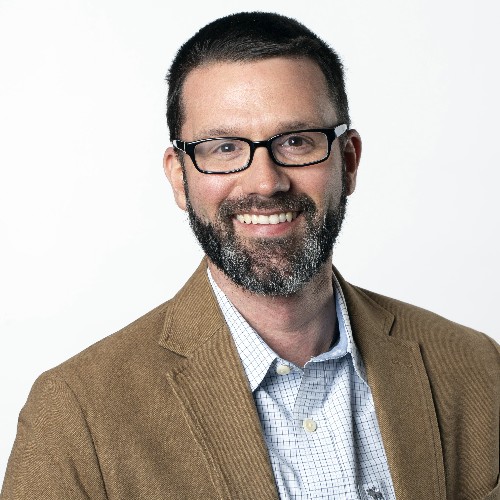
Ben Roush brings 22 years of professional mechanical engineering experience and a passion for sustainability in the built environment. Ben leads FSi’s sustainability studio and has taken part in more than 130 LEED projects across the country, as well as projects certified under ILFI, WELL, and Passive House standards.
He helped to develop FSi’s energy auditing, energy modeling, commissioning (Cx), and high-performance design expertise. He mentors younger engineers in sustainability best practices and technologies.
Ben has been the design engineer, project manager, LEED consultant, or commissioning agent for more than 100 LEED NC projects. His projects have been certified from LEED v2.2 through v4.
Ben has also played critical roles in projects pursuing LEED certification under Core and Shell, Schools, Homes Midrise, Warehouses, Commercial Interiors, and ID+C eating systems. As part of the E&A TAG for the past five years, he has worked extensively in development of LEED v5, showing a deep understanding of the new version across multiple certification systems
🌱Breaking Ground on Better Building
In this episode, Ben Roush shows what happens when one engineer stands where fire safety, mechanical systems, and sustainability meet.
🧠Key Insight #1: Sustainability is quietly rewriting fire protection
The Challenge: For decades, go-to fire suppression agents carried ozone-depletion and global-warming impacts similar to old refrigerants. Firefighting foams (AFFF) contained PFAS “forever chemicals.”
The Solution: Sustainability and EPA targets pushed the industry out of both. One widely used clean agent has been discontinued for its high global warming potential, and its price has more than doubled. AFFF is now limited to special uses like aircraft runway fires. And as A2L refrigerants move in, fire protection engineers now have a seat at the refrigerant table.
ROI: Safer, lower-impact systems in data centers and comm rooms. It’s a reminder that, as Ben puts it, sustainability can be a “sleeper” force in disciplines that never talk about it.
🧠Key Insight #2: Batteries vs. generators is a resilience conversation
The Challenge: Owners want to keep critical buildings running when the grid goes down. LEED v5 now forces a discussion of local climate risks like sea level rise. Maryland, for example, has about 3,100 miles of shoreline.
The Solution: Start with passive survivability: energy efficiency, operable windows, and occupant control. Then weigh battery storage against diesel generators case by case. Ben’s team is helping community resilience hubs work out what they can run, and for how long, on batteries.
ROI: Clear-eyed risk decisions. Battery fires are less likely than generator fires, but the consequences are orders of magnitude higher. Most owners want batteries for resilience, not peak shaving, because they want a full charge when the grid fails.
🧠Key Insight #3: Policy wins happen when people show up
The Challenge: Ambitious standards only pass when practitioners advocate for them, and there are never enough people in the room.
The Solution: Ben testified for Maryland’s Climate Solutions Now Act, which failed in 2021 and passed in 2022. It set up benchmarking and building energy performance standards for buildings of 35,000 sq ft and up. He now chairs the Maryland Green Building Council, which adopted a LEED v5–based standard for state-funded buildings: LEED Silver level, with mandatory credits that include electrification.
ROI: One committed group of volunteers shapes how an entire state builds. On the West Coast, clients mandating LEED Platinum or ILFI Petal certification have made it simply “the way of doing business.”
Sustainable Soundbite
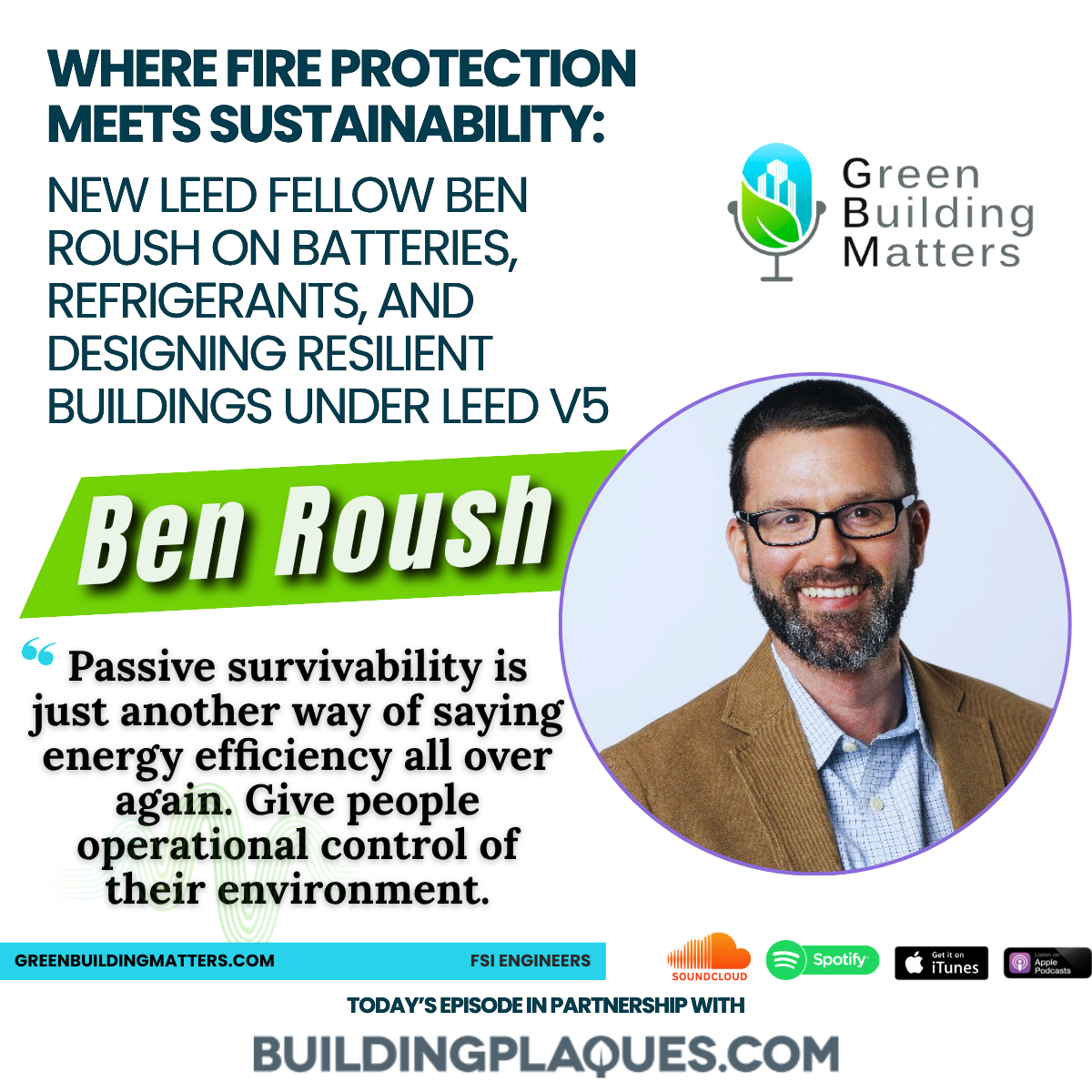
🤗 Your Green Building Action Plan
Transform your next project with these steps:
This Week: Check whether your current projects use clean-agent fire suppression or A2L refrigerants. Bring your fire protection engineer into the sustainability conversation early.
This Quarter: Run a LEED v5 resilience assessment on one project. List its top local climate risks and decide where electrical service, backup power, and passive survivability strategies belong.
This Year: Join a local USGBC community, AIA Committee on the Environment, or state advisory group, and show up to testify on one building policy. As Ben says, persistence matters: he applied at least twice before landing his LEED committee seat.
Connect & Learn More
🌿 Access full episode resources: Green Building Matters Podcast
💚Join the Green Building Movement
📄 Read the transcript: HERE
🔗 Connect with Ben Roush:

🤩 Want More Green Building Insights?
Don’t forget to catch more episodes and resources for all of your green building news at the Green Building Matters website.
Get sustainability tips 2x a week.
Subscribe to our FREE newsletter here:

🤝 Today’s Episode Sponsored By: BuildingPlaques.com
BuildingPlaques.com helps project teams showcase the story behind their LEED and green building certifications with fully customized architectural plaques.
Highlight your scorecard, sustainability strategy, project team, and certifications in one sleek display designed to educate and inspire building occupants.
Green Building Matters, Inc © 2026 | Good Green Fun